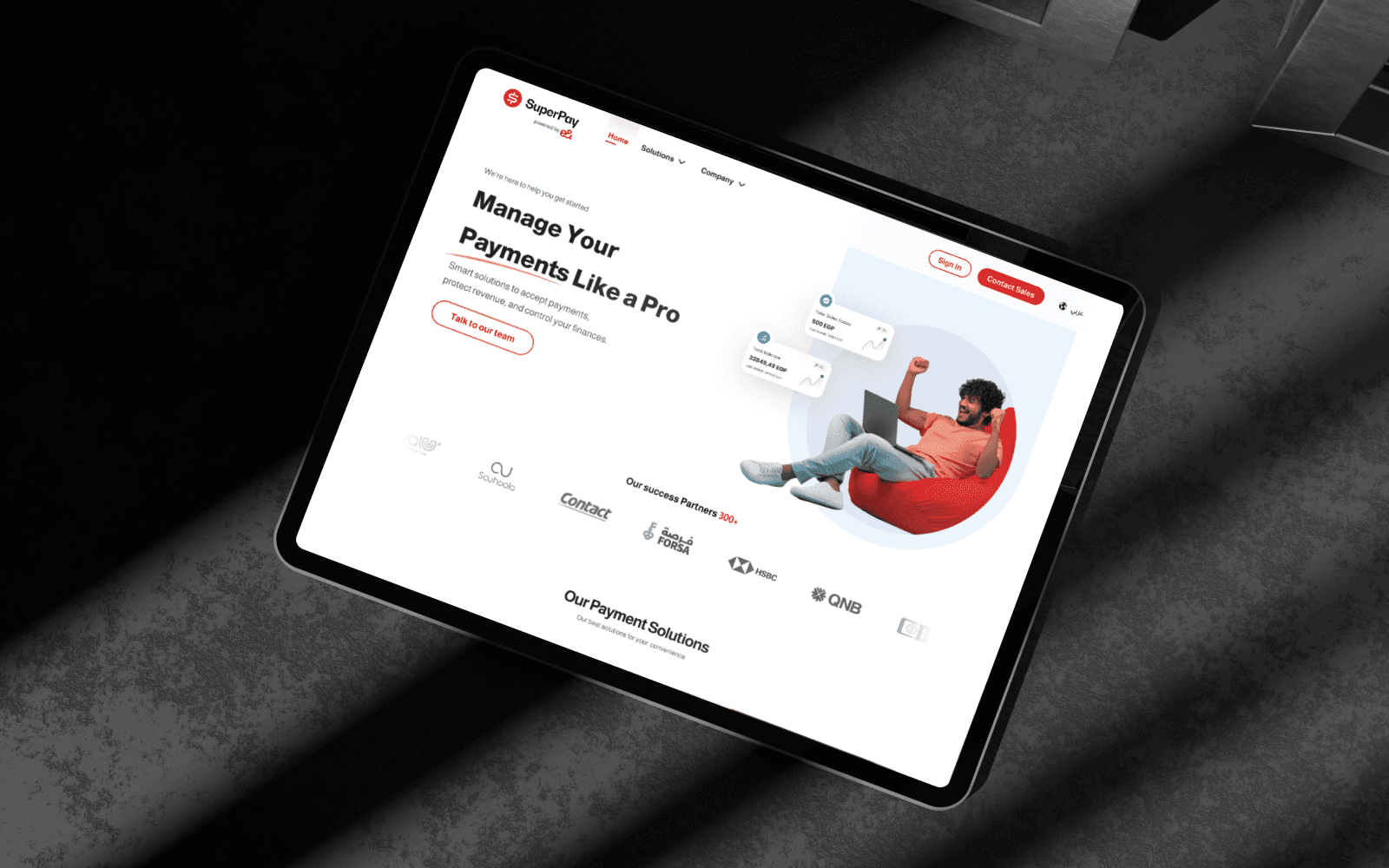
SuperPay Merchant Platform
A fintech dashboard for online merchants, balancing simplicity and scale.
Company
e& Egypt
Role
Product Designer
Timeline
12+ weeks
Team
2 Product Designers, PM, Developers
Overview
e& was shifting from a traditional telco into a software solutions provider. SuperPay was developed as a strategic product to position the company in Egypt's rapidly growing fintech sector. The merchant dashboard had to serve small and medium businesses managing online payments, balances, and transactions in one place.
The process
From research to handoff.
Empathize
Research
Define
Synthesis
Ideate
Information Architecture
Design
Wireframes
Test
Iteration
Refine
Delivery
- →Competitive analysis of international & local fintech dashboards
- →Stakeholder interviews to align with e&'s fintech vision
- →Merchant interviews to capture root pain points
- →Synthesized findings into a prioritized feature list
- →Aligned with stakeholders
- →Created IA: hierarchy of KPIs + trends + detailed data
- →Mapped navigation around core tasks
- →Early sketches exploring KPI placements and data tables
- →Wireframes to test hierarchy and grouping
- →Aligned continuously with PMs and business stakeholders
- →Incorporated usability testing from merchants
- →Delivered a high-fidelity UI with clear card layout for KPIs
- →Established a design system for fintech modules
Hover a stage to expand
Empathize
Research
- →Competitive analysis of international & local fintech dashboards
- →Stakeholder interviews to align with e&'s fintech vision
- →Merchant interviews to capture root pain points
Define
Synthesis
- →Synthesized findings into a prioritized feature list
- →Aligned with stakeholders
Ideate
Information Architecture
- →Created IA: hierarchy of KPIs + trends + detailed data
- →Mapped navigation around core tasks
Design
Wireframes
- →Early sketches exploring KPI placements and data tables
- →Wireframes to test hierarchy and grouping
Test
Iteration
- →Aligned continuously with PMs and business stakeholders
- →Incorporated usability testing from merchants
Refine
Delivery
- →Delivered a high-fidelity UI with clear card layout for KPIs
- →Established a design system for fintech modules
Problem
The problem.
01
Existing dashboards were either too technical (built for finance pros) or too shallow (surface-level data only)
02
Merchants needed something simple, insightful, and scalable
Research
Competitive analysis.
After liaising with stakeholders, we took a proactive approach by conducting thorough research into our competitors' features. It's imperative to stay ahead of the competition, and by doing so, we can ensure that our product or service stands out in the market.
Paymob
PayTabs
OPay
Geidea
Stripe
Scope
Feature list.
We aligned with stakeholders and engineering on a complete feature list before design started, so scope and priorities were clear to everyone from day one.
Main View
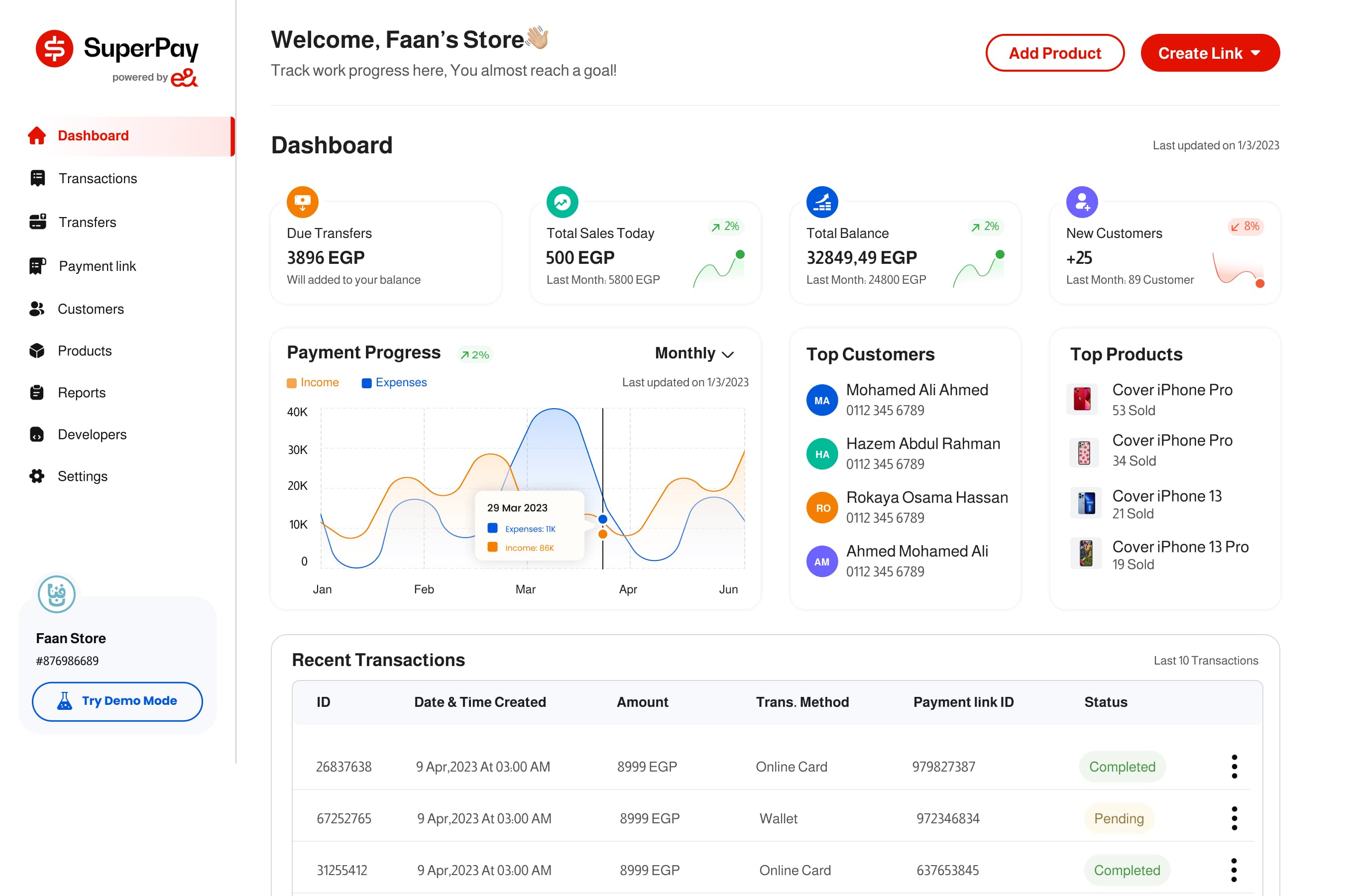
View Last 5 Transactions
View Statistics (Monthly Sales / New Customers / Top Customers / Payment Methods)
Create Invoice
Add Product
View Balance
Guide User On First Time
View Test / Live Mode
Account Settings
View Account Details
View / Add Users
View / Add Roles
View / Add Branches
Invoices
View Invoices (Create Single / Bulk)
View Subscriptions (Add)
View Payment Links (Create)
General
View Notifications
Chat Support
Change Language (Arabic / English)
Favorite Specific Tab
Logout / Switch Account
Customers
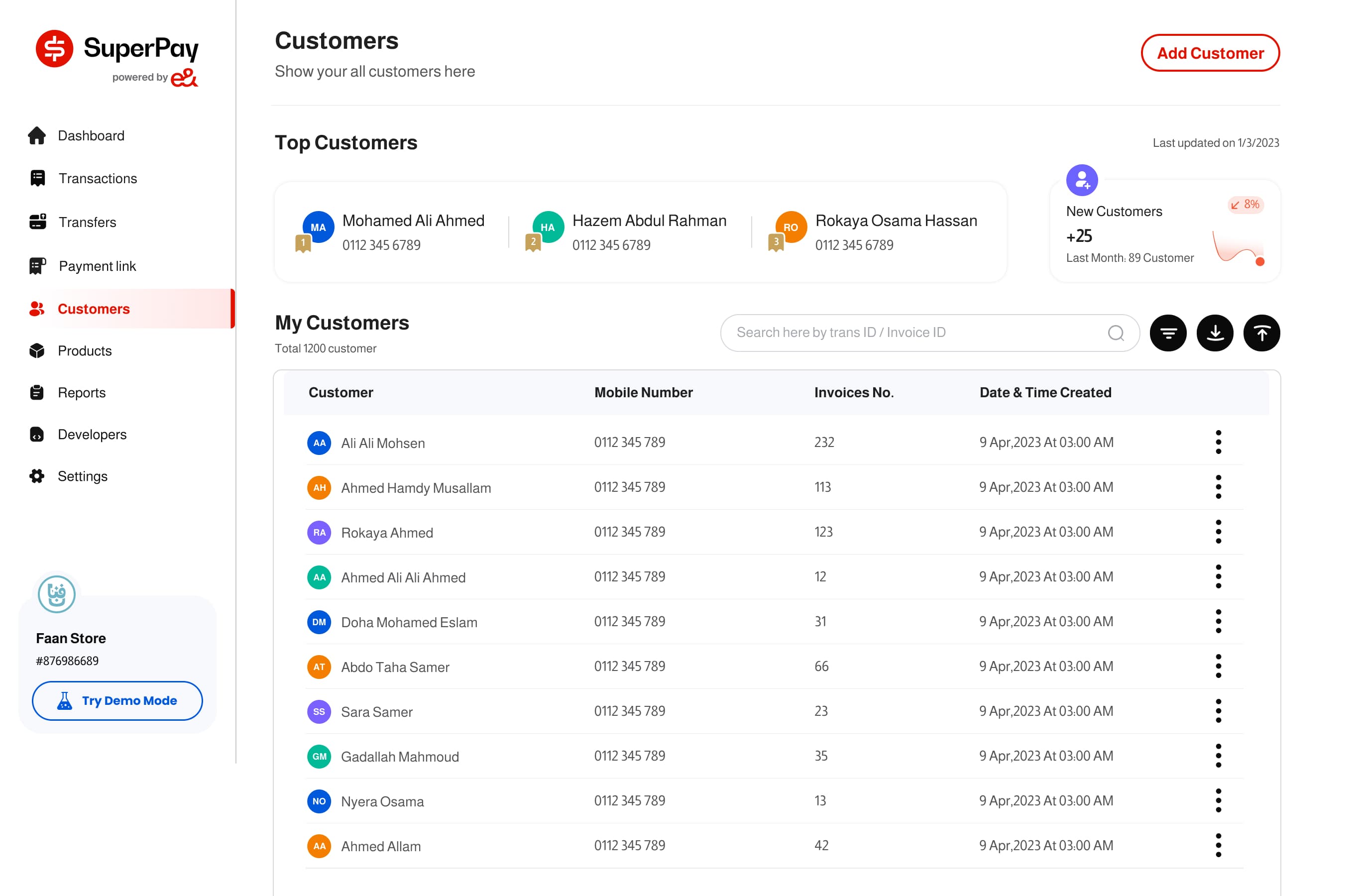
View All Customers (Search)
Add New Customer
Transfers
View All Transfers
Reports
Filter (Date / Report Type)
Transactions
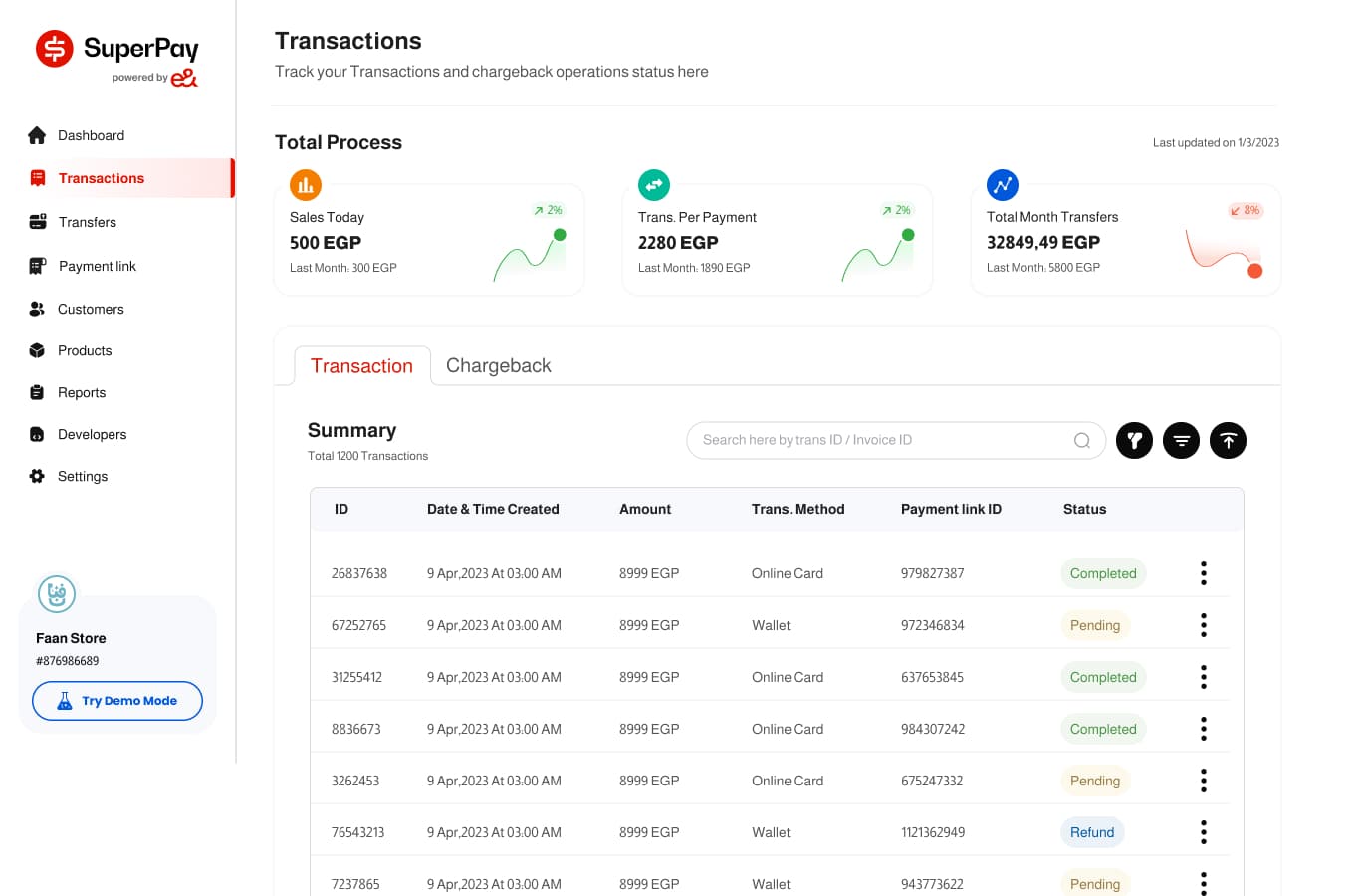
View Transactions
Payouts
View / Add Payouts
View / Add Beneficiary
Developers
View Developer's Guide & Documentation
POS Management
View / Add POS
Products
View All Products (Add / Search / Filter / Edit)
View Promocodes (Add)
Information architecture
Mapping the surface.
Sign In
Username / email
Password
Forgot password
Start Now
Register by service call
Register by fill form
Home (Dashboard)
Header
Create product
Create invoice
Statistics (overview by date)
- + 2 more
Payments
Transactions
Transfers
Payment share links
View share links
Export share links
Create share link
Reports
Reports types
View reports
Filter / search by report type & date range
Add new report layout
Customers
Add new customer
View customers
Quick search
Product management
Add new products (manually & bulk)
My products
Add promo codes
Invoices management
Create invoices (manually & bulk)
My invoices
Subscription (pricing model)
Ideation
From sketches to wireframes.
/ 01
Sketching
Quick sketches helped the two designers on the project align on shape and flow before any pixels.
/ 02
Wireframes
Wireframes set the structure for user testing. Across four rounds, we iterated on layout and hierarchy, then moved on to high-fidelity once the patterns held up.
Solution
The solution.
Refinement
Refinement.
/ 01
Design System
Established a scalable system of components, typography, and patterns that improved consistency and supported future fintech modules.
/ 02
Responsive Design
Refined the dashboard to work seamlessly across devices, ensuring merchants could track payments and insights on any screen size.
Outcomes & reflection
Outcomes & Reflection.
Despite a cluttered and ambiguous process, we aligned stakeholders and merchants to deliver a dashboard that met both business goals and user needs.
- 01
Business Impact: The dashboard gained rapid early adoption, giving e& a credible entry into fintech and differentiating it from its legacy telco positioning. Check their website
- 02
User Impact: Merchants gained daily visibility into KPIs and transactions without manual exports.
- 03
Design Impact: Responsive design and a scalable system ensured long-term consistency and fast iteration.
This project taught me that designing from scratch means shaping product vision, balancing simplicity, collaboration, and scalability to deliver impact.